Today's
EarthStation1.com 15% Off Commemorative Memorial Title: Remember
Pearl Harbor 50th Anniversary Special MP4 Video Download DVD
Today, December 7, 2025
December 7: National Pearl Harbor Remembrance Day: -- December 7, 1941: World War II: The Pacific War (The Asia-Pacific War, The Asiatic-Pacific Theater, The Pacific Theater Of World War II): The Asiatic-Pacific Theater: The Attack On Pearl Harbor (The Battle Of Pearl Harbor, The Hawaii Operation, Operation AI, Operation Z): -- The U.S. Naval base at Pearl Harbor, Hawaii, is attacked in a surprise military strike by the Imperial Japanese Navy Air Service. The attack leads to the United States' entry into World War II. The Japanese military leadership referred to the attack as the Hawaii Operation and Operation AI, and as Operation Z during its planning. Japan intended the attack as a preventive action to keep the U.S. Pacific Fleet from interfering with military actions they planned in Southeast Asia against overseas territories of the United Kingdom, the Netherlands, and the United States. Over the next seven hours there were coordinated Japanese attacks on the U.S.-held Philippines, Guam and Wake Island and on the British Empire in Malaya, Singapore, and Hong Kong. The attack commenced at 7:48 a.m. Hawaiian Time. The base was attacked by 353 Imperial Japanese aircraft (including fighters, level and dive bombers, and torpedo bombers) in two waves, launched from six aircraft carriers. All eight U.S. Navy battleships were damaged, with four sunk. All but the USS Arizona were later raised, and six were returned to service and went on to fight in the war. The Japanese also sank or damaged three cruisers, three destroyers, an anti-aircraft training ship, and one minelayer. One hundred eighty-eight U.S. aircraft were destroyed; 2,403 Americans were killed and 1,178 others were wounded. Important base installations such as the power station, dry dock, shipyard, maintenance, and fuel and torpedo storage facilities, as well as the submarine piers and headquarters building (also home of the intelligence section), were not attacked. Japanese losses were light: 29 aircraft and five midget submarines lost, and 64 servicemen killed. One Japanese sailor, Kazuo Sakamaki, was captured. The surprise attack came as a profound shock to the American people and led directly to the American entry into World War II in both the Pacific and European theaters. The following day, December 8, the United States declared war on Japan, and several days later, on December 11, Germany and Italy declared war on the U.S. The U.S. responded with a declaration of war against Germany and Italy. Domestic support for non-interventionism, which had been fading since the Fall of France in 1940, disappeared. There were numerous historical precedents for unannounced military action by Japan, but the lack of any formal warning, particularly while negotiations were still apparently ongoing, led President Franklin D. Roosevelt to proclaim December 7, 1941, "a date which will live in infamy". Because the attack happened without a declaration of war and without explicit warning, the attack on Pearl Harbor was later judged in the Tokyo Trials to be a war crime. On Sale @ 15% Off Discount Till Midnight PT! https://store.earthstation1.com/remember-pearl-harbor-50th-anniversary-special-mp4-video-download-dvd.html
Today's
EarthStation1.com 15% Off Commemorative Memorial Title: Heroes
Medal Of Honor Victoria Cross Legion Of Honour DVD MP4 USB Drive
Today, December 7, 2025
December 7, 1941: USN Warrant Officer Donald K. Ross, first Medal Of Honor recipient of World War II (December 8, 1910 - May 27, 1992), earns the medal for his actions aboard the battleship USS Nevada during the Attack On Pearl Harbor. Nevada was badly damaged by bombs and torpedoes. Ross distinguished himself by assuming responsibility to furnish power to get the ship underway - the only battleship to do so during the Japanese attack. When the forward dynamo room where he was stationed filled with smoke and steam, he ordered his men to leave and continued servicing the dynamo himself until being blinded and falling unconscious. Upon being rescued and resuscitated, he went back to secure the forward dynamo, then worked in the aft dynamo room until losing consciousness a second time due to exhaustion. After waking, he again returned to his duties until Nevada was beached. His actions kept the ship under power, preventing it from sinking in the channel and blocking other ships in the harbor. On Sale @ 15% Off Discount Till Midnight PT! https://store.earthstation1.com/heroes-dvd-set-all-26-tv-shows-7-di267.html
Today's
EarthStation1.com 15% Off Commemorative Memorial Title: Medal Of
Honor: World War II: Pearl Harbor & Pacific MP4 Download DVD
Today, December 7, 2025
December 7, 1941: USN Chief Petty Officer John William Finn (July 24, 1909 - May 27, 2010) earns the Medal Of Honor for his actions as a machine gunner during the Attack On Pearl Harbor. As a chief aviation ordnanceman stationed at Naval Air Station Kaneohe Bay, he manned a machine gun from an exposed position throughout the attack, despite being repeatedly wounded. Despite his wounds, Finn returned to the hangars later that day. After receiving medical treatment, he helped arm the surviving American planes. On Sale @ 15% Off Discount Till Midnight PT! https://store.earthstation1.com/medal-of-honor-world-war-ii-pearl-harbor-amp-pacific-mp4-download-dv4.html
Today's
EarthStation1.com 15% Off Commemorative Memorial Title: Pearl
Harbor: Surprise And Remembrance w/ Jason Robards DVD, MP4, USB
Today, December 7, 2025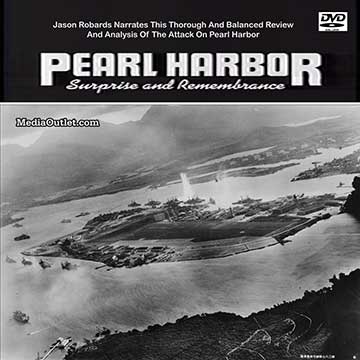
May 27, 1942: Doris "Dorie" Miller (October 12, 1919 - November 24, 1943), United States Navy cook third class who was killed in action during World War II, becomes the first black American to be awarded the Navy Cross, the highest decoration for valor in combat after the Medal Of Honor. Miller served aboard the battleship West Virginia, which was sunk by Japanese torpedo bombers during the surprise attack on Pearl Harbor on December 7, 1941. During the attack, he helped several sailors who were wounded, and while manning an anti-aircraft machine gun for which he had no training, he shot down several Japanese planes. Miller's actions earned him the medal, and the resulting publicity for Miller in the black press made him an iconic emblem of the fight for civil rights for black Americans. In November 1943, Miller was killed while serving aboard the escort carrier Liscome Bay when it was sunk by a Japanese submarine during the Battle of Makin in the Gilbert Islands. The destroyer escort/Knox-class frigate USS Miller (reclassified as a frigate in June 1975), in service from 1973 to 1991, was named after him. On January 19, 2020, the Navy announced that a Gerald R. Ford-class nuclear powered aircraft carrier, CVN-81, would be named after Miller. The ship is scheduled to be laid down in 2026 and launched in 2029. On Sale @ 15% Off Discount Till Midnight PT! https://store.earthstation1.com/pearl-harbor-surprise-and-remembrance-dvd-jason-robards.html
Today's
EarthStation1.com 15% Off Commemorative Memorial Title: USS
Arizona: The Life And Death Of A Lady DVD, MP4 Download, USB Drive
Today, December 7, 2025
December 7, 1941: World War II: The Pacific War (The Asia-Pacific War, The Asiatic-Pacific Theater, The Pacific Theater Of World War II): The Asiatic-Pacific Theater: The Attack On Pearl Harbor (The Battle Of Pearl Harbor, The Hawaii Operation, Operation AI, Operation Z): -- #DOTD: #RIP: USS Arizona (BB-39), the second and last of the Pennsylvania class of "super-dreadnought" battleships built for the United States Navy in the mid-1910s (launched June 19, 1915) is destroyed when she is hit by Japanese torpedo bombers that dropped armor-piercing bombs during the attack on Pearl Harbor. After one of their bombs detonated in a magazine, she exploded violently and sank, with the loss of 1,177 officers and crewmen. Unlike many of the other ships sunk or damaged that day, Arizona was irreparably damaged by the force of the magazine explosion, though the Navy removed parts of the ship for reuse. The wreck still lies at the bottom of Pearl Harbor beneath the USS Arizona Memorial. Dedicated on May 30 1962 to all those who died during the attack, the memorial straddles but does not touch the ship's hull. USS Arizona was launched from the New York Navy Yard (now known as the Brooklyn Navy Yard). The New York Times estimated that 75,000 people attended the launch, including many high-ranking political and military officials. Named in honor of the 48th state's recent admission into the union and commissioned in 1916, the ship remained stateside during World War I. Shortly after the end of the war, Arizona was one of a number of American ships that briefly escorted President Woodrow Wilson to the Paris Peace Conference. The ship was sent to Turkey in 1919 at the beginning of the Greco-Turkish War to represent American interests for several months. Several years later, she was transferred to the Pacific Fleet and remained there for the rest of her career. Aside from a comprehensive modernization in 1929-1931, Arizona was regularly used for training exercises between the wars, including the annual Fleet Problems (training exercises). When an earthquake struck Long Beach, California, on 10 March 1933, Arizona's crew provided aid to the survivors. In July 1934, the ship was featured in a James Cagney film, Here Comes the Navy, about the romantic troubles of a sailor. In April 1940, she and the rest of the Pacific Fleet were transferred from California to Pearl Harbor, Hawaii, as a deterrent to Japanese imperialism. On Sale @ 15% Off Discount Till Midnight PT! https://store.earthstation1.com/uss-arizona-the-life-and-death-of-a-lady-dvd.html
Today's
EarthStation1.com 15% Off Commemorative Memorial Title: Dear
Jackie: Condolence Letters To Jacqueline Kennedy DVD MP4 USB
Today, December 7, 2025
December 7: National Letter Writing Day: -- Dear reader, it's been so long since we wrote, but fortunately today we have no excuse! Letter writing has been in decline because of smartphones, the Internet and before that, the telephone, but for hundreds of years, it was the only way for people separated by distance to get in touch with one another. National Letter Writing Day brings back the charm of handwritten notes. It's a day filled with nostalgia, creativity, and personal connection. This date honors Mark Twain, a legendary American author known for his love of letter writing. The day stands out in the digital age, reminding us of the personal touch that comes with a handwritten letter. Unlike emails or texts, letters carry a unique essence, offering a more intimate form of communication. They encourage us to pause, reflect, and convey our thoughts with care and consideration. This practice strengthens personal connections and serves as a creative outlet, allowing for the use of beautiful stationery and stamps, making each letter a work of art?. Celebrating National Letter Writing Day can involve various activities, such as writing heartfelt letters to loved ones, crafting stationery, and even organizing letter exchanges among friends or family. It's a chance to express gratitude, share memories, or let someone know they're in your thoughts. This day is not just about reviving a fading art; it's an opportunity to create lasting memories and connections that stand the test of time. National Letter Writing Day probably has origins that date back to Victorian England, where letter writing was a vital skill and a cherished form of communication. This tradition, deeply ingrained in European culture for centuries, made its way to America and became widely practiced. The establishment of the United States Post Office Department in 1775 by the Continental Congress played a significant role in developing letter writing. Over time, the rise of technology such as email and social media led to a decline in letter writing, but recent years have seen a revival in this art form. National Letter Writing Day reminds us of handwritten letters' unique value and personal touch. It stands as a testament to the timeless nature of letter writing, allowing us to express our thoughts and feelings intimately. This day encourages us to slow down, reflect, and communicate more thoughtfully and deliberately. It's a celebration of the tradition of letter writing, urging us to connect with others through the written word in a world dominated by digital communication. National Letter Writing Day offers everyone a chance to reconnect with a more personal and thoughtful form of communication. So today is a great day to get back to basics and hand-write a letter. But isn't the idea of sitting down for half an hour and hand-writing something to somebody special? We miss it. Don't you? Write back soon. Love, us. On Sale @ 15% Off Discount Till Midnight PT! https://store.earthstation1.com/dear-jackie-condolence-letters-to-jacqueline-kennedy-dvd-mp4-us4.html
Today's
EarthStation1.com 15% Off Commemorative Memorial Title: Civil
Props: The Douglas DC-3 DVD, MP4 Video Download, USB Drive
Today, December 7, 2025
December 7: International Civil Aviation Day: -- Today we celebrate to acknowledge the flight industry's influence on modern life. It's incredible to think that in less than 24 hours you can transport your body to pretty much anywhere in the world. Flying has made the world a much smaller place and had a huge impact on our lives. Stay updated on news related to aviation by top aviation journalists. Today we celebrate the impact of flying and are thankful that it has opened so many doors for all of us. The International Civil Aviation Organization (ICAO), a specialist organization within the United Nations, established December 7 as the day to celebrate the impact that civil aviation has had on the world. Tourism and business have both been changed forever due to flying, not to mention the cultural connections that have been enabled. The first International Civil Aviation Day was held in 1994 as part of ICAO's 50th anniversary and in 1996 the United Nations General Assembly officially recognized 7 December as International Civil Aviation Day. They agreed to try and use the day to reinforce the importance of civil aviation to social and economic development, and to recognize the unique role the International Civil Aviation Organization plays in helping countries to cooperate and bring to life a truly global transit network. As the UN has now adopted Agenda 2030, a pledge for the reduction of pollution that comes with the end goal of a new era in global sustainable development, the importance of aviation as an engine of global connectivity remains just as relevant. As such, in recognition of ICAO's 75th anniversary, the council selected the theme "75 Years of Connecting the World" for the 2019 celebrations, which will run through to 2024. International Civil Aviation Day is a day to enjoy the extraordinary things humans are capable of and to look at the future, as we continue to innovate and bring cultures closer together. On Sale @ 15% Off Discount Till Midnight PT! https://store.earthstation1.com/civil-props-the-douglas-dc3-dv3.html
Today's
EarthStation1.com 15% Off Commemorative Memorial Title: The
Hermitage Museum World's Greatest Art Collections MP4 Download DVD
Today, December 7, 2025
December 7, 1764: Grand Openings: -- The Hermitage Musuem is founded on St. Catherine's Day (November 25 O.S.) in honor of its patroness, Catherine The Great. The State Hermitage Museum (Russian: Gosudarstvennyj Ermitaz) is a museum of art and culture in Saint Petersburg, Russia. It is the second largest art museum in the world by gallery space. It was founded in 1764 when Empress Catherine the Great acquired an impressive collection of paintings from the Berlin merchant Johann Ernst Gotzkowsky. The museum celebrates the anniversary of its founding each year on December 7, Saint Catherine's Day. It has been open to the public since 1852. The Western European Art collection includes European paintings, sculpture, and applied art from the 13th to the 20th centuries. It is displayed, in about 120 rooms, on the first and second floor of the four main buildings. Drawings and prints are displayed in temporary exhibitions. Since 1940, the Egyptian collection, dating back to 1852 and including the former Castiglione Collection, has occupied a large hall on the ground floor in the eastern part of the Winter Palace. The collection of classical antiquities occupies most of the ground floor of the Old and New Hermitage buildings. On the ground floor in the western wing of the Winter Palace the collections of prehistoric artifacts and the culture and art of the Caucasus are located. Four small rooms on the ground floor, enclosed in the middle of the New Hermitage between the room displaying Classical Antiquities, comprise the first treasure gallery, featuring western jewellery from the 4th millennium BC to the early 20th century AD. The Italian Renaissance galleries continues in the eastern wing of the New Hermitage with paintings, sculpture, majolica and tapestry from Italy of the 15th-16th centuries, including Conestabile Madonna and Madonna with Beardless St. Joseph by Raphael. They feature works of Italian Renaissance artists, including Giorgione, Titian, Veronese, as well as Benois Madonna and Madonna Litta attributed to Leonardo da Vinci or his school. The first floor of New Hermitage contains three large interior spaces in the center of the museum complex that feature Italian and Spanish canvases of the 16th-18th centuries, including Veronese, Giambattista Pittoni, Tintoretto, Velazquez and Murillo. The Knights' Hall, a large room in the eastern part of the New Hermitage originally designed in the Greek revival style for the display of coins, now hosts a collection of Western European arms and armour from the 15th-17th centuries, part of the Hermitage Arsenal collection. The rooms and galleries along the southern facade and in the western wing of the New Hermitage are now entirely devoted to Dutch Golden Age and Flemish Baroque painting of the 17th century, including the large collections of Van Dyck, Rubens and Rembrandt. They also contain several paintings by Jan Brueghel the Elder (Velvet period), Frans Snyders (for example, The Fish Market), Gerard ter Borch, Paulus Potter, Jacob van Ruisdael, Jan van Goyen, Ferdinand Bol and Gerard van Honthorst. The first floor rooms on the southern facade of the Winter Palace are occupied by the collections of German fine art of the 16th century and French fine art of the 15th-18th centuries, including paintings by Poussin, Lorrain, Watteau. The collections of French decorative and applied art from the 17th-18th centuries and British applied and fine art from the 16th-19th century, including Thomas Gainsborough and Joshua Reynolds, are on display in nearby rooms facing the courtyard. This area also holds paintings by German artists, including Hans Wertinger, Lucas Cranach the Elder, Barthel Bruyn the Elder, Caspar David Friedrich (Moonrise by the Sea), Anton Mengs, Hans Thoma, Anselm Feuerbach, Franz Stuck (Two Men Fighting Over a Woman) and Heinrich Campendonk as well as paintings by Swiss painters Angelica Kauffman, Alexandre Calame, Arnold Bocklin and Ferdinand Hodler. The richly decorated interiors of the first floor of the Winter Palace on its eastern, northern and western sides are part of the Russian culture collection and host the exhibitions of Russian art from the 11th-19th centuries. Temporary exhibitions are usually held in the Nicholas Hall. French Neoclassical, Impressionist and post-Impressionist art, including works by Renoir, Monet, Van Gogh and Gauguin, are displayed on the fourth floor of the Eastern Wing of the General Staff Building. Also displayed are paintings by Camille Pissarro (Boulevard Montmartre, Paris), Paul Cezanne (Mount Sainte-Victoire), Alfred Sisley, Henri Morel, and Degas. Modern art is displayed in the General Staff Building (Saint Petersburg). It features Matisse, Derain and other fauvists, Picasso, Malevich, Petrocelli, Kandinsky, Giacomo Manzu, Giorgio Morandi and Rockwell Kent. A large room is devoted to the German Romantic art of the 19th century, including several paintings by Caspar David Friedrich. The second floor of the Western wing features collections of the Oriental art (from China, India, Mongolia, Tibet, Central Asia, Byzantium and Near East). The Art Newspaper ranked the museum 6th in their list of the most visited art museums, with 1,649,443 visitors in 2021. Its collections, of which only a small part is on permanent display, comprise over three million items (the numismatic collection accounts for about one-third of them). The collections occupy a large complex of six historic buildings along Palace Embankment, including the Winter Palace, a former residence of Russian emperors. Apart from them, the Menshikov Palace, Museum of Porcelain, Storage Facility at Staraya Derevnya, and the eastern wing of the General Staff Building are also part of the museum. The museum has several exhibition centers abroad. The Hermitage is a federal state property. Since July 1992, the director of the museum has been Mikhail Piotrovsky. Of the six buildings in the main museum complex, five - the Winter Palace, Small Hermitage, Old Hermitage, New Hermitage, and Hermitage Theatre - are all open to the public. The entrance ticket for foreign tourists costs more than the fee paid by citizens of Russia and Belarus. However, entrance is free of charge the third Thursday of every month for all visitors, and free daily for students and children. The museum is closed on Mondays. The entrance for individual visitors is located in the Winter Palace, accessible from the Courtyard. On Sale @ 15% Off Discount Till Midnight PT! https://store.earthstation1.com/hemuwogrartc.html
Today's
EarthStation1.com 15% Off Commemorative Memorial Title: Clive
James' Fame In The 20th Century TV Series DVD Set MP4 USB Drive
Today, December 7, 2025
December 7, 1891: #BOTD (Fictional): Godfather Vito Corleone (d. July 29, 1955 (Fictional)) is #born on the same date that 50 years later the Pearl Harbor attack occurs, the same day his son and future Godfather Michael Corleone enlists in the U.S. Marines. Vito Corleone (born Vito Andolini) is a fictional character in Mario Puzo's 1969 novel The Godfather and in the first two of Francis Ford Coppola's film trilogy. Vito was originally portrayed by Marlon Brando in the 1972 film The Godfather and later by Oreste Baldini as a boy and by Robert De Niro as a young man in The Godfather Part II (1974). He was an orphaned Sicilian immigrant who built a Mafia empire. He and his wife Carmela had four children: Santino ("Sonny"), Frederico ("Fredo"), and Michael, and one daughter Constanzia ("Connie"). Vito informally adopted Sonny's friend, Tom Hagen, who became his lawyer and consigliere. Upon Vito's death, Michael succeeded him as Don of the Corleone crime family. Vito oversaw a business founded on gambling, bootlegging, prostitution, and union corruption, but he was known as a kind, generous man who lived by a strict moral code of loyalty to friends and, above all, to family. He was also known as a traditionalist who demanded respect commensurate with his status; even his closest friends refered to him as "Godfather" or "Don Corleone" rather than "Vito". Vito Corleone died of a heart attack in his garden while playing with his grandson, Michael's son Anthony. In the novel, his last words are, "Life is so beautiful." He was buried in Calvary Cemetery, a Roman Catholic cemetery located in Woodside, Queens, New York City, a cemetery managed by the Trustees of St. Patrick's Cathedral, one of the oldest and largest cemeteries in the United States. His funeral was attended by many crime family members from across the country. It was at this funeral that Vito's son and new Godfather, Michael Corleone, discovered that it was Caporegime Salvatore "Sal" Tessio, one of Don Vito Corleone's most trusted friends, who was the traitor in the family Don Vito warned Don Michael about, saying that whoever approached Michael about setting up a meeting with Don Emilio Barzini of the Barzini crime family (inspired by the Genovese crime family) was the traitor within the Corleone crime family (a family that has drawn comparisons with the real-life Genovese and Bonanno crime families). Accordingly, as Tessio and Corleone family Consigliere Tom Hagen were preparing to attend the summit, Corleone family hitman and soldato Willie Cicci told Tessio that Michael was coming in a separate car. Tessio was visibly upset, saying that it threw off his "arrangements". Hagen said he couldn't come along either, while Cicci and several of Clemenza's men surrounded Tessio. Realizing that Michael had found out about his treachery, Tessio asked Tom to tell Michael that it was "only business" and he always liked him. Tessio then asked Tom if he could get him off the hook for "the old times' sake". Tom rejected his appeal. Willie Cicci and a few other men then drove Tessio to Two Toms, Tessio's social club, where his traitorous men were executed. Tessio, and his dead co-conspirators were then brought to an abandoned gas station on Staten Island where he was executed by his former protege Nick Geraci, while Corleone hitman, security head and Caporegime Al Neri, looked on. His death was attributed to the Barzini family, since Staten Island was their territory, which explained the death of Don Barzini at the same time. Tessio's wife Lucille and his children were provided for by the Corleones after his death. Vito Corleone is based on a composite of mid-20th century New York Mafia figures Carlo Gambino, Frank Costello, Joe Bonanno, and Joe Profaci; he is also partly based on Philadelphia crime boss Angelo Bruno. On Sale @ 15% Off Discount Till Midnight PT! https://store.earthstation1.com/clive-james39-fame-in-the-20th-century-tv-series-dvd-set-mp4-usb-39204.html
Today's
EarthStation1.com 15% Off Commemorative Memorial Title: World War
1 TV Series With Robert Ryan DVD, Video Download, USB Drive
Today, December 7, 2025
December 7, 1917: The European Civil War: World War I: The First European War (The European Theater Of World War I): The Western Front Of World War I: The United States In World War I: American Entry Into World War I: The 1917 United States Declaration Of War On Austria-Hungary: -- United States House Joint Resolution 169 declares that a state of war existed between the United States of America and the Austro-Hungarian Empire. The resolution passed the House with a vote of 365-1, and passed the Senate in a vote of 74-0. The president signed the declaration later that day, bringing the declaration into effect the same day. It occurred eight months after the earlier declaration of war against Germany that had brought the United States into World War I. In his speech to Congress requesting for war to be declared against Germany, President Wilson addressed the question of Austria-Hungary, Germany's most powerful ally: "that government [Austria-Hungary] has not actually engaged in warfare against citizens of the United States on the seas, and I take the liberty, for the present at least, of postponing a discussion of our relations with the government in Vienna." Two days later, Austria-Hungary terminated diplomatic relations with the United States and requested, in a diplomatic note that was delivered to the charge d'affaires of the US embassy in Vienna, for American diplomats to depart the country. On December 4, 1917, Wilson had appeared before Congress to deliver the 1917 State Of The Union Address. In it, he requested a declaration of war against Austria-Hungary, and stated such a declaration to be necessary to "clear away with a thorough hand all impediments to success." Wilson went on to charge that Austria-Hungary was "the vassal of the German government" and was acting as the "instrument of another nation." However, Wilson's real impetus for seeking a declaration of war against was the situation in Italy. American military planners believed that it might soon be necessary to deploy American forces to shore up Italian defenses against robust Austrian gains. In response to Wilson's address, Henry D. Flood introduced House Joint Resolution 169, a declaration of war, which was referred to the House Committee on Foreign Affairs for consideration. The committee issued a report stating that the "state of war which this declaration declares to exist actually has been a fact for many months" and unanimously recommended adoption of the resolution. The report went on to charge that in September 1915, Konstantin Dumba, the Austro-Hungarian ambassador to the United States, had masterminded a scheme of industrial sabotage aimed at American manufacturing and that on April 4, 1917 the crew of an unflagged submarine boarded and then sank the American schooner SV Marguerite in the Mediterranean and that the nationality of the submarine was suspected Austrian since "Austrian was the language spoken by the officer of the submarine [sic]" (the sinking of the SV Marguerite was later credited instead to a German U-boat, the SM U-35). In autumn 1918, the imperial government collapsed, and on October 18, Stephan Burian Von Rajecz, acting on behalf of the remnants of the state organs, sued for peace. The US Senate declined to ratify the Treaty of Saint-Germain-en-Laye and the Treaty of Trianon, which established peace between the Allied powers and Austria-Hungary and resulted in the formal dissolution of the Austro-Hungarian Empire. As a result, the state of war between the United States and a nonexistent Austria-Hungary continued, albeit without active hostilities, until it was officially terminated by the U.S.-Austrian Peace Treaty (1921) and the U.S.-Hungarian Peace Treaty (1921), which were signed by Austria-Hungary's successor states: Austria and Hungary. On Sale @ 15% Off Discount Till Midnight PT! https://store.earthstation1.com/world-war-1-robert-ryan-4-dual-layer-dvds-26-episode-tv-se1426.html
Today's
EarthStation1.com 15% Off Commemorative Memorial Title:
Understanding Northern Ireland: The Historical Evidence MP4 Or DVD
Today, December 7, 2025
December 7, 1922: 20th Century Civil Wars (Civil Wars Of The 20th Century): Ireland: The History Of Ireland: Irish Nationalism: The Irish Revolutionary Period (1912-1923): The Irish War Of Independence (January 21, 1919 - July 11, 1921) (The Anglo-Irish War, Irish: Cogadh Na Saoirse): The Irish War Of Independence (January 21, 1919 - July 11, 1921) (The Anglo-Irish War, Irish: Cogadh Na Saoirse): The Irish Civil War (Irish: Cogadh Cathartha na hEireann) (June 28, 1922 - May 24, 1923): The 1921 Anglo-Irish Treaty (Irish: An Conradh Angla-Eireannach) (Officially "The Articles Of Agreement For A Treaty Between Great Britain And Ireland"; Vernacular "The Treaty"): The Irish Free State (Gaelic: Saorstat Eireann) (December 6, 1922 - December 29, 1937): Northern Ireland's Exercise Of Article 12 Of The 1921 Anglo-Irish Treaty: -- The option to opt out of the newly-founded Irish Free State, an option provided to Northern Ireland under Article 12 of The 1921 Anglo-Irish Treaty signed the day prior, is exercised by The Parliament Of Northern Ireland when it votes the day following the signing of The Treaty to remain a part of the United Kingdom, maintain its home rule government as a dependent country within the United Kingdom, and thereby not unify with Southern Ireland, the larger of the two parts of Ireland that were created when Ireland was partitioned by the Government of Ireland Act 1920 -- resulting in Southern Ireland alone becoming The Irish Free State, which state later became the fully independent state of Ireland in 1937 with the adoption of its own constitution. The Irish Free State was a state established in December 1922 under the Anglo-Irish Treaty which ended the three-year Irish War of Independence between the forces of the Irish Republic-the Irish Republican Army (IRA)-and British Crown forces. The Free State was established as a dominion of the British Empire. It comprised 26 of the 32 counties of Ireland. Northern Ireland, which was made up of the remaining six counties, exercised its right under the Treaty to opt out of the new state. The Free State government consisted of the governor-general-the representative of the king-and the Executive Council (cabinet), which replaced both the revolutionary Dail Government and the Provisional Government set up under the Treaty. W. T. Cosgrave, who had led both of these administrations since August 1922, became the first president of the Executive Council (prime minister). The Oireachtas or legislature consisted of Dail Eireann (the lower house) and Seanad Eireann (the upper house), also known as the Senate. Members of the Dail were required to take an Oath of Allegiance to the Constitution of the Free State and to declare fidelity to the king. The oath was a key issue for opponents of the Treaty, who refused to take it and therefore did not take their seats. Pro-Treaty members, who formed Cumann na nGaedheal in 1923, held an effective majority in the Dail from 1922 to 1927 and thereafter ruled as a minority government until 1932. On Sale @ 15% Off Discount Till Midnight PT! https://store.earthstation1.com/understanding-northern-ireland-the-historical-evidence-mp4-or-dvd.html
Today's
EarthStation1.com 15% Off Commemorative Memorial Title: Women Of
Courage: The WASP Aviators Of WWII DVD MP4 Download USB Drive
Today, December 7, 2025
December 7, 1944: The European Civil War: World War II: The Second European War (The European Theater Of World War II): Aviation: Military Aviation: Air Warfare Of World War II: Women Airforce Service Pilots (WASP): -- The final class of WASP pilots, 71 women in total, graduated from their training regardless of the plan to disband the WASP program within the following two weeks. The Women Airforce Service Pilots (WASP) (also Women's Army Service Pilots or Women's Auxiliary Service Pilots) was a civilian women pilots' organization, whose members were United States federal civil service employees. Members of WASP became trained pilots who tested aircraft, ferried aircraft, and trained other pilots. Their purpose was to free male pilots for combat roles during World War II. Despite various members of the armed forces being involved in the creation of the program, the WASP and its members had no military standing. WASP was preceded by the Women's Flying Training Detachment (WFTD) and the Women's Auxiliary Ferrying Squadron (WAFS). Both were organized separately in September 1942. They were pioneering organizations of civilian women pilots, who were attached to the United States Army Air Forces to fly military aircraft during World War II. On August 5, 1943, the WFTD and WAFS merged to create the WASP organization. The WASP arrangement with the US Army Air Forces ended on December 20, 1944. During its period of operation, each member's service had freed a male pilot for military combat or other duties. They flew over 60 million miles; transported every type of military aircraft; towed targets for live anti-aircraft gun practice; simulated strafing missions and transported cargo. Thirty-eight WASP members lost their lives and one disappeared while on a ferry mission, her fate still unknown. In 1977, for their World War II service, the members were granted veteran status, and in 2009 awarded the Congressional Gold Medal. On Sale @ 15% Off Discount Till Midnight PT! https://store.earthstation1.com/women-of-courage-the-wasp-aviators-of-wwii-dvd-mp4-download-usb-driv5.html
Today's
EarthStation1.com 15% Off Commemorative Memorial Title: China In
Revolution 1911-1949 TV Series DVD, Download, USB Flash Drive
Today, December 7, 2025
December 7, 1949: China: The History Of China: The Century Of Humiliation (The Hundred Years Of National Humiliation) (1838-1945): The Chinese Civil War: The History Of The Republic Of China (1912-1949): The Retreat Of The Republic Of China To Taiwan: -- Generalissimo Chiang Kai-shek's two million Kuomintang (KMT, Chinese Nationalist Party) nationalist troops and officers, in addition to many civilians and refugees fleeing the advance of the Communist People's Liberation Army, retreat from mainland China to the Chinese island province of Taiwan (Formosa) on the 8th anniversary of the Japanese Attack On Pearl Harbor, ending any chance of the GMD reclaiming the rule over China proper. This ensured that the Chinese Communist Party (CCP) under the leadership of Chairman Mao Zedong was the new government of the Chinese nation. The Retreat Of The Republic Of China To Taiwan, also known as the Kuomintang's Retreat To Taiwan, also known in Taiwan as The Great Retreat, refers to the exodus of the remnants of the internationally recognized Kuomintang-ruled government of the Republic Of China to the island of Taiwan in December 1949 toward the end of active battles in the Chinese Civil War. Kuomintang troops mostly fled to Taiwan from provinces in southern China, including Szechuan Province, where the last stand of the Republic Of China's main army took place. The flight to Taiwan took place over four months after Mao Zedong had proclaimed the founding of the People's Republic Of China in Peking on October 1, 1949. Over the course of 4 months beginning in August 1948, the ROC leaders had relocated the Republic Of China Air Force to Taiwan, taking over 80 flights and 3 ships. An average of 50 or 60 planes flew daily between Taiwan and China transporting fuel and ammunition between August 1948 and December 1949. During this time, Chiang also sent the 26 naval vessels of the Nationalist army to Taiwan. The final Communist assault against Nationalist forces began on April 20, 1949 and continued until the end of summer. By August, the People's Liberation Army dominated almost all of mainland China; the Nationalists held only Taiwan and the Pescadores Islands, some parts of Kwangtung, Fukien, Chekiang and a few regions in China's far west. Institute of History and Philology director Fu Ssu-nien spearheaded a rush to persuade scholars to flee to Taiwan, as well as bringing books and documents. After the retreat, the Republic Of China leadership, led by Generalissimo and President Chiang Kai-shek planned to make the retreat only temporary, hoping to regroup, fortify and reconquer the mainland. This plan, which never came into fruition, was known as "Project National Glory", and made the national priority of the Republic Of China on Taiwan. Once it became apparent that such a plan could not be realized, Taiwan's national focus shifted to the modernization and economic development of Taiwan, even as the ROC continues to claim sovereignty over regions under PRC control despite losing international recognition. In 1949, Chiang's government imposed martial law and persecuted critics during the White Terror, the brutal suppression of political dissidents involved in the 1947 native Taiwanese population's anti-KMT government protests known as the February 28 Incident. Presiding over a period of social reforms and economic prosperity, Chiang won five elections to six-year terms as President of the Republic Of China and was Director-General of the Kuomintang until his death in 1975, three years into his fifth term as President and just one year before Mao's death. One of the longest-serving non-royal heads of state in the 20th century, Chiang became the longest-serving non-royal ruler of China, having held the post for 46 years. On Sale @ 15% Off Discount Till Midnight PT! https://store.earthstation1.com/china-in-revolution-19111949-dvd-2-part-tv-documenta191119492.html
Today's
EarthStation1.com 15% Off Commemorative Memorial Title: Outer
Space Films 5: Apollo Moon Exploration Films DVD, Download, USB
Today, December 7, 2025
December 7, 1972: Rocket Launches: The History Of Rocketry: The History Of Spaceflight: The Aftermath Of World War II: The Cold War: The Space Age: The Space Race: Space Programs Of The United States: Human Spaceflight Programs: The Discovery And Exploration Of The Solar System: Missions To The Moon: Project Apollo: Apollo 17: -- The last Apollo Moon mission is launched at 05:33:00 UTC (12:33 a.m. EST) from the Kennedy Space Center Launch Complex 39A (LC-39A), the first night launch of a U.S. human spaceflight and the final manned launch of a Saturn V rocket, with a crew made up of Commander Eugene Cernan, Command Module Pilot Ronald Evans, and Lunar Module Pilot Harrison Schmitt. Apollo 17 was the last use of Apollo hardware for its original purpose; after Apollo 17, extra Apollo spacecraft were used in the Skylab and Apollo-Soyuz programs. On the way to the moon, either Harrison Schmitt or Ron Evans took a photo of the Earth that has become known as The Blue Marble, one of the most reproduced images in history. The Apollo 17 moon landing included three days on the lunar surface, extended scientific capability, and the third Lunar Roving Vehicle (LRV). While Evans remained in lunar orbit in the Command/Service Module (CSM), Cernan and Schmitt spent just over three days on the moon in the Taurus-Littrow valley and completed three moonwalks, taking lunar samples and deploying scientific instruments. Evans took scientific measurements and photographs from orbit using a Scientific Instruments Module mounted in the Service Module. The landing site was chosen with the primary objectives of Apollo 17 in mind: to sample lunar highland material older than the impact that formed Mare Imbrium, and investigate the possibility of relatively new volcanic activity in the same area. Cernan, Evans and Schmitt returned to Earth on December 19 after a 12-day mission. Apollo 17 is the most recent manned Moon landing and was the last time humans travelled beyond low Earth orbit. It was also the first mission to have no one on board who had been a test pilot; X-15 test pilot Joe Engle lost the lunar module pilot assignment to Schmitt, a scientist. The mission broke several records: the longest moon landing, longest total extravehicular activities (moonwalks), largest lunar sample, and longest time in lunar orbit. To date they are the last humans to set foot on the Moon. On December 19, 1972, this last known manned lunar flight splashed down at 19:54:58 UTC in the South Pacific Ocean and were retrieved by the Essex-class aircraft carrier USS Ticonderoga (CV/CVA/CVS-14). On Sale @ 15% Off Discount Till Midnight PT! https://store.earthstation1.com/outer-space-films-5-apollo-moon-exploration-dv5.html
Today's
EarthStation1.com 15% Off Commemorative Memorial Title: Rock &
Roll An Unruly History 10 Part TV Series MP4 Video Download DVD
Today, December 7, 2025
December 7, 1984: Aesthetics: The Performing Arts: Music: Music History: Music Of The United Kingdom: Charity Records (Charity Songs): Do They Know It's Christmas?: -- Band Aid's charity song "Do They Know It's Christmas?" is released in the United Kingdom. On November 25, 1984, thirty-six top British, Irish and American musicians gathered at Sarm West Studios in Notting Hill, London to record the song in a single day. "Do They Know It's Christmas?" is a charity song written in 1984 by Bob Geldof (of The Boomtown Rats) and Midge Ure (of Ultravox) to raise money for the 1983-1985 famine in Ethiopia. It entered the UK singles chart at number one, where it remained for five weeks. It sold a million copies in the first week, making it the fastest-selling single in UK chart history until Elton John's "Candle in the Wind 1997". UK sales passed three million by 1985. The song also reached number one in 13 other countries. In the US, it fell short of the top ten in the Billboard Hot 100, but sold an estimated 2.5 million copies by 1985. It had sold 11.7 million copies worldwide by 1989 and 3.8 million in the UK by 2017. "Do They Know It's Christmas?" raised 8M PS for Ethiopia within a year, far exceeding Geldof's hopes. The artists included vocalists Robert "Kool" Bell (Kool & the Gang); Bono (U2); Pete Briquette (the Boomtown Rats); Adam Clayton (U2); Phil Collins (Genesis and solo artist); Chris Cross (Ultravox); Simon Crowe (the Boomtown Rats); Sara Dallin (Bananarama); Siobhan Fahey (Bananarama); Johnny Fingers (the Boomtown Rats); Bob Geldof (the Boomtown Rats); Boy George (Culture Club); Glenn Gregory (Heaven 17); Tony Hadley (Spandau Ballet); John Keeble (Spandau Ballet); Gary Kemp (Spandau Ballet); Martin Kemp (Spandau Ballet); Simon Le Bon (Duran Duran); Marilyn; George Michael (Wham!); Jon Moss (Culture Club); Steve Norman (Spandau Ballet); Rick Parfitt (Status Quo); Nick Rhodes (Duran Duran); Francis Rossi (Status Quo); Sting (the Police); Andy Taylor (Duran Duran); James "J.T." Taylor (Kool & the Gang); John Taylor (Duran Duran); Roger Taylor (Duran Duran); Dennis Thomas (Kool & the Gang); Midge Ure (Ultravox); Martyn Ware (Heaven 17); Jody Watley; Paul Weller (the Style Council); Keren Woodward (Bananarama); and Paul Young. Musicians included Phil Collins (drums), John Taylor (bass guitar) and Midge Ure (PPG Wave, Yamaha DX7, OSCar, DrumTraks programming). Spoken messages on the B-side were by David Bowie; Stuart Adamson; Mark Brzezicki; Tony Butler; Bruce Watson (Big Country); Holly Johnson (Frankie Goes to Hollywood); and Paul McCartney. The success inspired other charity singles, such as "We Are the World" (1985) by USA for Africa, and charity events such as Comic Relief and the 1985 Live Aid concert. Some critics and musicians said the song misrepresented Africa as barren or ignorant and that its lyrics contains factual inaccuracies; Ure said it was secondary to the purpose of raising money for the cause. "Do They Know It's Christmas?" was rerecorded and rereleased with different musicians in 1989, 2004 and 2014. The 1989 and 2004 versions also raised funds for famine relief, while the 2014 version raised funds for the Ebola crisis in West Africa. All three reached number one in the UK, and the 1989 and 2004 versions were Christmas number ones. The 2004 version sold 1.8 million copies. A new mix, combining elements of the previous versions, was released in 2024 for the 40th anniversary. On Sale @ 15% Off Discount Till Midnight PT! https://store.earthstation1.com/rock-amp-roll-an-unruly-history-10-part-tv-series-mp4-video-download-104.html
Today's
EarthStation1.com #OnThisDay Commemorative Memorial Title: Teenage
Dating Films 1946-1958 DVD, MP4 Video Download, USB Drive
Today, December 7, 2025 December 7: National Cotton Candy Day: --
Celebrated to our sweet tooth's joy and our dentists' dismay! But
did you know dentists actually invented it in the first place? It
was even called fairy floss back in the day, and is still called
candy floss in Great Britain. Now, it's the go-to at county fairs
and a must-have when riding a Ferris wheel. Most of our childhood
memories wouldn't have been complete without the sugary cloud that
is cotton candy. National Cotton Candy Day celebrates the spun
sugar treat that delights candy fans of all ages. On December 7th
get your favorite flavor of this sweet delight that dates back to
the 1400s. Originally called spun sugar, cotton candy is still a
staple at carnivals, fairs, and the circus. While it may be
reminiscent of childhood days, fairy floss also reminds us of
fluffy clouds. Since the heated sugar gets spun into thin strands
of fine sugar and blown into fat puffs twirled onto paper sticks,
it's a bit like magic. We associate it with other magical
occasions, too. Carnivals and fairs, the zoo, and the circus
delight us. We associate a bit of joy and magic with cotton candy.
Nostalgic memories of bustling crowds and the music of the
calliope bring a smile to our faces. Cotton candy comes with
adventure! During the 18th century, cotton candy (spun sugar) was
first recorded in Europe. At that time, it was very expensive and
labor-intensive. Generally, the average person could not afford to
purchase cotton candy. Then in 1897, Dentist William Morrison and
confectioner John C. Wharton invented machine-spun cotton candy.
Their invention introduced cotton candy to a wider audience at the
1904 World's Fair as Fairy Floss. Fairgoers loved it and bought
over 68,000 boxes for 0.25 USD a box!
https://store.earthstation1.com/teenage-dating-films-194619461958.html
December 7: National Cotton Candy Day: --
Celebrated to our sweet tooth's joy and our dentists' dismay! But
did you know dentists actually invented it in the first place? It
was even called fairy floss back in the day, and is still called
candy floss in Great Britain. Now, it's the go-to at county fairs
and a must-have when riding a Ferris wheel. Most of our childhood
memories wouldn't have been complete without the sugary cloud that
is cotton candy. National Cotton Candy Day celebrates the spun
sugar treat that delights candy fans of all ages. On December 7th
get your favorite flavor of this sweet delight that dates back to
the 1400s. Originally called spun sugar, cotton candy is still a
staple at carnivals, fairs, and the circus. While it may be
reminiscent of childhood days, fairy floss also reminds us of
fluffy clouds. Since the heated sugar gets spun into thin strands
of fine sugar and blown into fat puffs twirled onto paper sticks,
it's a bit like magic. We associate it with other magical
occasions, too. Carnivals and fairs, the zoo, and the circus
delight us. We associate a bit of joy and magic with cotton candy.
Nostalgic memories of bustling crowds and the music of the
calliope bring a smile to our faces. Cotton candy comes with
adventure! During the 18th century, cotton candy (spun sugar) was
first recorded in Europe. At that time, it was very expensive and
labor-intensive. Generally, the average person could not afford to
purchase cotton candy. Then in 1897, Dentist William Morrison and
confectioner John C. Wharton invented machine-spun cotton candy.
Their invention introduced cotton candy to a wider audience at the
1904 World's Fair as Fairy Floss. Fairgoers loved it and bought
over 68,000 boxes for 0.25 USD a box!
https://store.earthstation1.com/teenage-dating-films-194619461958.html
Today's
EarthStation1.com #OnThisDay Commemorative Memorial Title: The X
Planes TV Documentary Series DVD, MP4, USB Drive
Today, December 7, 2025December 7, 2020: #DOTD: #RIP: Chuck
Yeager, United States Air Force general, flying ace and
record-setting test pilot (b. February 13, 1923) #dies at the age
of 97 in the afternoon at a Los Angeles hospital. He is buried at
Lincoln Memorial Cemetery in Hamlin, West Virginia. He was born
Charles Elwood Yeager in Myra, West Virginia into a farming
family. In 1947, he became the first pilot confirmed to have
exceeded the speed of sound in level flight. Yeager's career began
in World War II as a private in the United States Army Air Forces.
After serving as an aircraft mechanic, in September 1942 he
entered enlisted pilot training and upon graduation was promoted
to the rank of flight officer (the World War II USAAF equivalent
to warrant officer) and became a P-51 fighter pilot. After the
war, Yeager became a test pilot of many types of aircraft,
including experimental rocket-powered aircraft. As the first human
to officially break the sound barrier, on October 14, 1947, he
flew the experimental Bell X-1 at Mach 1 at an altitude of 45,000
ft (13,700 m). Scott Crossfield was the first to fly faster than
Mach 2 in 1953, and Yeager shortly thereafter set a new record of
Mach 2.44. Yeager later commanded fighter squadrons and wings in
Germany, and in Southeast Asia during the Vietnam War, and in
recognition of the outstanding performance ratings of those units
he was promoted to brigadier general. Yeager's flying career spans
more than 60 years and has taken him to every corner of the globe,
including the Soviet Union during the height of the Cold War.
https://store.earthstation1.com/the-x-planes-tv-documentary-series-dvd-mp4-usb-driv4.html
Today's
EarthStation1.com #OnThisDay Commemorative Memorial Title: Damn
The Defiant! H.M.S. Defiant 1962 RN Alec Guinness DVD MP4 USB
Today, December 7, 2025December 7, 1817: #DOTD: William Bligh,
English admiral of the British Royal Navy and politician, 4th
Governor of New South Wales (b. September 9, 1754) #dies of cancer
in Bond Street in Lambeth, London, England, and was buried in a
family plot at St. Mary's, Lambeth (this church is now the Garden
Museum). His tomb was notable for its use of Coade stone
(Lithodipyra), a compound of clay and other materials which was
moulded in imitation of carved stonework and fired in a kiln. This
stoneware was produced by Eleanor Coade at her factory in Lambeth.
The tomb is topped by an eternal flame, not a breadfruit. A plaque
marks Bligh's house, one block east of the Garden Museum at 100
Lambeth Road, across the street from the Imperial War Museum.
William Bligh was born either in Plymouth, Devon, or St Tudy,
Cornwall, England, infamous for The Mutiny On The Bounty that
occurred during his command of HMS Bounty in 1789, and for the
epic journey he and his loyal men made to Timor, some 3,618
nautical miles (6,701 km; 4,164 mi), after being set adrift in
Bounty's launch by the mutineers. Fifteen years after the Bounty
mutiny, on August 13, 1806, he was appointed Governor of New South
Wales in Australia, with orders to clean up the corrupt rum trade
of the New South Wales Corps. His actions directed against the
trade resulted in the so-called Rum Rebellion, during which Bligh
was placed under arrest on January 26, 1808 by the New South Wales
Corps and deposed from his command, an act which the British
Foreign Office later declared to be illegal.
https://store.earthstation1.com/damn-the-defiant-alec-guinness-napoleonic-british-naval-dvd.html
Today's
EarthStation1.com #OnThisDay Commemorative Memorial Title: Sold
Down The River: Black Freedom Lost After Civil War DVD, MP4, USB
Today, December 7, 2025December 7, 1874: White Supremacy:
Terrorism: Anti-Black Racism: Anti-Black Racism In The United
States: Race Riots: Race Riots In The United States: The
Reconstruction Era (Reconstruction): The Freedmen Massacres: The
Vicksburg Massacre (The Vicksburg Riot): -- White southern
Democrats kill between 75 to 300 African American Republicans in a
massacre at Vicksburg, Mississippi, who had organized a political
meeting to defend of a duly elected Black sheriff. Peter Crosby, a
former slave and veteran of the Union army, had been improperly
forced to resign after taking office by a spurious indictment on
false criminal charges. The Black citizens in Vicksburg organized
an effort to try to help Mr. Crosby regain his office. In
response, white mobs attacked and killed dozens of Black citizens
in an act of racial terrorism, which would later become known as
the "Vicksburg Massacre". Following this brutal attack,
federal troops were sent to Vicksburg and Mr. Crosby was appointed
as sheriff again. However, in early 1875, a white man named J.P.
Gilmer was hired to serve as Sheriff Crosby's deputy. After
Sheriff Crosby tried to have Mr. Gilmer removed from office, Mr.
Gilmer shot Sheriff Crosby in the head on June 7, 1875. Mr. Gilmer
was arrested for the attempted assassination but never brought to
trial. Mr. Crosby survived the shooting but never made a full
recovery, and had to serve the remainder of his term through a
representative white citizen.
https://store.earthstation1.com/sold-down-the-river-black-liberty39s-loss-after-civil-war-dvd-mp4-394.html
Today's
EarthStation1.com #OnThisDay Commemorative Memorial Title: The
Story Of Civilization: Will & Ariel Durant DVD, MP3 Download,
USB
Today, December 7, 2025December 7, 43 B.C.: #DOTD: #RIP: Marcus
Tullius Cicero, best known as Cicero, Roman statesman, lawyer,
scholar, orator, philosopher and academic skeptic,, who served as
consul in the year 63 BC and who, during the political crises that
led to the establishment of the Roman Empire, tried to uphold
optimate principles (supporters of the continued authority of the
senate, politicians who operated mostly in the senate, or
opponents of the populares [the popular assemblies, generally in
opposition to the senate, using the populace, rather than the
senate, as a means for advantage, i.e. "the people" or
"the rabble", depending]) (b. January 3, 106 BC) #dies
aged 63 when, under the orders of Cicero's enemy, Mark Antony
serving as consul at that time, he is assassinated leaving his
villa in the Italian caost city of Formiae (modern Formia) hoping
to embark on a ship destined for Macedonia. When his killers -
Herennius (a Centurion) and Popilius (a Tribune) - arrived,
Cicero's own slaves said they had not seen him, but he was given
away by Philologus, a freedman of his brother Quintus Cicero. As
reported by Seneca the Elder, according to the historian Aufidius
Bassus, Cicero's last words were "I go no further: approach,
veteran soldier, and, if you can at least do so much properly,
sever this neck." He bowed to his captors, leaning his head
out of the litter in a gladiatorial gesture to ease the task. By
baring his neck and throat to the soldiers, he was indicating that
he would not resist. According to Plutarch, Herennius first slew
him, then cut off his head. His burial details are unknown. On
Antony's instructions his hands, which had penned the Philippics
against Antony, were cut off as well; these were nailed along with
his head on the Rostra in the Forum Romanum according to the
tradition of Marius and Sulla, both of whom had displayed the
heads of their enemies in the Forum. Cicero was the only victim of
the proscriptions who was displayed in that manner. According to
Cassius Dio, in a story often mistakenly attributed to Plutarch,
Antony's wife Fulvia took Cicero's head, pulled out his tongue,
and jabbed it repeatedly with her hairpin in final revenge against
Cicero's power of speech. Cicero's son, Marcus Tullius Cicero
Minor, during his year as a consul in 30_BC, avenged his father's
death, to a certain extent, when he announced to the Senate Mark
Antony's naval defeat in The Battle Of Actium by Octavian and his
Commander-In-Chief, Agrippa. Octavian is reported to have praised
Cicero as a patriot and a scholar of meaning in later times,
within the circle of his family. However, it was Octavian's
acquiescence that had allowed Cicero to be killed, as Cicero was
condemned by the new triumvirate. Cicero was born Marcus Tullius
Cicero in Arpinum, a hill town 100 kilometers (62 mi) southeast of
Rome. He came from a wealthy municipal family of the Roman
equestrian order, and is considered one of Rome's greatest orators
and prose stylists. His influence on the Latin language was so
immense that the subsequent history of prose, not only in Latin
but in European languages up to the 19th century, was said to be
either a reaction against or a return to his style. According to
Michael Grant, "the influence of Cicero upon the history of
European literature and ideas greatly exceeds that of any other
prose writer in any language". Cicero introduced the Romans
to the chief schools of Greek philosophy and created a Latin
philosophical vocabulary (with neologisms such as evidentia,
humanitas, qualitas, quantitas, and essentia) distinguishing
himself as a translator and philosopher. Though he was an
accomplished orator and successful lawyer, Cicero believed his
political career was his most important achievement. It was during
his consulship that the second Catilinarian conspiracy attempted
to overthrow the government through an attack on the city by
outside forces, and Cicero suppressed the revolt by executing five
conspirators without due process. During the chaotic latter half
of the 1st century BC marked by civil wars and the dictatorship of
Gaius Julius Caesar, Cicero championed a return to the traditional
republican government. Following Julius Caesar's death, Cicero
became an enemy of Mark Antony in the ensuing power struggle,
attacking him in a series of speeches. He was proscribed as an
enemy of the state by the Second Triumvirate and consequently
executed by soldiers operating on their behalf in 43 BC after
having been intercepted during attempted flight from the Italian
peninsula. His severed hands and head were then, as a final
revenge of Mark Antony, displayed in the Roman Forum, and his
hands and tongue were thereafter nailed to the rostrum of the
Roman Senate, the setting where he had given some of his greatest
orations, as a warning to the Senate and all those who agreed with
Cicero. Petrarch's rediscovery of Cicero's letters is often
credited for initiating the 14th-century Renaissance in public
affairs, humanism, and classical Roman culture. According to
Polish historian Tadeusz Zielinski, "the Renaissance was
above all things a revival of Cicero, and only after him and
through him of the rest of Classical antiquity." The peak of
Cicero's authority and prestige came during the 18th-century
Enlightenment, and his impact on leading Enlightenment thinkers
and political theorists such as John Locke, David Hume,
Montesquieu and Edmund Burke was substantial. His works rank among
the most influential in European culture, and today still
constitute one of the most important bodies of primary material
for the writing and revision of Roman history, especially the last
days of the Roman Republic.
https://store.earthstation1.com/story-of-civilization-will-amp-ariel-durant-mp3-dvd-11-audiobo311.html
Today's
EarthStation1.com #OnThisDay Commemorative Memorial Title:
Television: A History Of Broadcast TV DVD MP4 Download USB Drive
Today, December 7, 2025December 7, 1985: #DOTD: #RIP: Robert
Graves, English poet, historical novelist, critic, classicist and
ceremonial magician (b. July 24, 1895) #dies of heart failure in
Deia, a small coastal village in the Serra de Tramuntana which
forms the northern ridge of the Spanish island of Mallorca, Spain,
at the age of 90 years, having taken a vow of silence before
dying. His body was buried the next morning in the small
churchyard on a hill at Deia, at the site of a shrine that had
once been sacred to the White Goddess of Pelion His second wife,
Beryl Graves, died on October 27, 2003 and her body was interred
in the same grave. Robert Graves was born Robert Von Ranke Graves
into a middle-class family in Wimbledon, then part of Surrey, now
part of south London. His father was Alfred Perceval Graves, a
celebrated Irish poet and figure in the Gaelic revival; they were
both Celticists and students of Irish mythology. Graves produced
more than 140 works. Graves's poems-together with his translations
and innovative analysis and interpretations of the Greek myths;
his memoir of his early life, including his role in World War I,
Good-Bye to All That; and his speculative study of poetic
inspiration, The White Goddess-have never been out of print. He
earned his living from writing, particularly popular historical
novels such as I, Claudius, King Jesus, The Golden Fleece and
Count Belisarius. He also was a prominent translator of Classical
Latin and Ancient Greek texts; his versions of The Twelve Caesars
and The Golden Ass remain popular, for their clarity and
entertaining style. Graves was awarded the 1934 James Tait Black
Memorial Prize for both I, Claudius and Claudius the God. Later,
in the 1970s, the Claudius books were turned into the very popular
star-studded television series I, Claudius, starring Sir Derek
Jacobi as Claudius, which was shown many times over many years in
reruns both in Britain and on public television in the United
States. During the early 1970s, Graves began to experience
increasingly severe memory loss. By his 80th birthday in 1975, he
had come to the end of his working life. He lived for another
decade, in an increasingly dependent condition.
https://store.earthstation1.com/television-1988-tv-documentary-series-8-shows-4-dual-laye198884.html
Today's
EarthStation1.com #OnThisDay Commemorative Memorial Title: DJ
Madness! 1950s-60s-70s Radio Shows DVD, MP3 Download, USB Drive
Today, December 7, 2025December 7, 1942: #BOTD: #HBD! Harry
Chapin, American singer, songwriter, guitarist and philanthropist
(d. July 16, 1981) is #born Harry Forster Chapin in New York City,
the second of four children in a family of entirely English
ancestroy, a family who also included future musicians Tom and
Steve. His parents were Jeanne Elspeth (nee Burke) and Jim Chapin,
a famous jazz drummer and the author of books about jazz drumming.
Harry Chapin is best known for his folk rock and pop rock songs.
He achieved worldwide success in the 1970s and became one of the
most popular artists and highest-paid performers. Chapin is also
one of the best charting musical artists in the United States.
Chapin, a Grammy Award-winning artist and Grammy Hall of Fame
inductee, has sold over 16 million records worldwide. He has been
described as one of the most beloved performers in music history.
Chapin recorded a total of 11 albums from 1972 until his death in
1981. All 14 singles that he released became hits on at least one
national music chart. As a dedicated humanitarian, Chapin fought
to end world hunger. He was a key participant in the creation of
the Presidential Commission on World Hunger in 1977. Chapin is
credited with being the most politically and socially active
American performer of the 1970s. Harry Chapin died in the
afternoon while driving on the Long Island Expressway en route to
perform at a free benefit concert at Eisenhower Park in East
Meadow, New York, that evening. At 12:27 p.m., Chapin had
reportedly put on his emergency flashers, decelerated his
vehicle's speed to 15 mph, and had weaved from the far-left lane
to the center lane, to the left lane, and then back to the center
lane before his vehicle was struck from behind by a semi-trailer
truck. The force of the collision crushed the rear of the car,
ruptured the fuel tank, and dragged the car several hundred feet
on the pavement. Chapin was fatally injured in the fiery traffic
collision with a semi-trailer truck outside Jericho, New York.
Passers-by managed to help the unconscious Chapin out of his
engulfed 1975 Volkswagen Rabbit and he was immediately taken by
helicopter to the nearby Nassau County Medical Center where he was
pronounced dead at 1:05 p.m. due to internal bleeding. Chapin's
widow won a 12M USD decision in a negligence lawsuit against
Supermarkets General (Pathmark), the owners of the truck involved.
Chapin is buried in the Huntington Rural Cemetery in Huntington,
New York. His epitaph is taken from his 1978 song "I Wonder
What Would Happen to This World": "Oh if a man tried |
To take his time on Earth | And prove before he died | What one
man's life could be worth | I wonder what would happen | to this
world". In 1987, Chapin was posthumously awarded the
Congressional Gold Medal for his humanitarian work.
https://store.earthstation1.com/dj-radio-airchecks-mp3-dvd-1950s60s70s-dis319506070.html
Today's
EarthStation1.com #OnThisDay Commemorative Memorial Title: Music
Documentaries III Video Pioneers Tom Waits Turtles DVD, MP4, USB
Today, December 7, 2025December 7, 1949: #BOTD: #HBD! Tom Waits,
American singer, songwriter, guitarist, pianist, composer and
actor, is #born Thomas Alan Waits, in Pomona, California to a
middle-class Euro-American family. He has a distinctive voice,
described by critic Daniel Durchholz as sounding as though "it
was soaked in a vat of bourbon, left hanging in the smokehouse for
a few months, and then taken outside and run over with a car".
Waits has built up a distinctive musical persona with his
trademark growl, his incorporation of pre-rock music styles such
as blues, jazz, and vaudeville, and experimental tendencies
verging on industrial music. Waits was raised in Whittier,
California and then San Diego. Inspired by Bob Dylan and the Beat
Generation, as a teenager he began singing on the San Diego folk
music scene. Relocating to Los Angeles, he secured work as a
songwriter before gaining a recording contract with Asylum Records
and producing his first album, Closing Time, in 1973. He has
worked as a composer for movies and musicals and has acted in
supporting roles in films, including Paradise Alley and Bram
Stoker's Dracula. He also starred in Jim Jarmusch's 1986 film Down
by Law. He was nominated for an Academy Award for his soundtrack
work on One from the Heart. Waits' lyrics frequently present
atmospheric portraits of grotesque, often seedy characters and
places, although he has also shown a penchant for more
conventional ballads. He has a cult following and has influenced
subsequent songwriters despite having little radio or music video
support. His songs are best-known through cover versions by more
commercial artists: "Jersey Girl" performed by Bruce
Springsteen, "Ol' '55" by the Eagles, "Downtown
Train" by Rod Stewart, and "Come On Up To The House"
by Sarah Jarosz. Waits' albums have met with mixed commercial
success in his native United States, although they have
occasionally achieved gold album sales status in other countries.
He has been nominated for a number of major music awards and has
won Grammy Awards for the albums Bone Machine and Mule Variations.
In 2011, Waits was inducted into The Rock And Roll Hall Of Fame.
He is also included among the 2010 list of Rolling Stone's 100
Greatest Singers, as well as the 2015 list of Rolling Stone's 100
Greatest Songwriters of All Time. Waits lives in Sonoma County,
California with his wife and frequent collaborator Kathleen
Brennan (married August 1980) and their three children.
https://store.earthstation1.com/music-documentaries-iii-dvd-video-pioneers-tom-waits-turtles.html
Today's
EarthStation1.com #OnThisDay Commemorative Memorial Title: WABC
Radio Airchecks MP3 Collection 1960s-1980s DVD, MP3 Download, USB
Today, December 7, 2025December 7, 2008: #DOTD: #RIP: Dennis
Yost, American singer, songwriter and drummer and founder of the
Classics IV (b. July 20, 1943) #dies at the age of 65 from
respiratory failure on the 40th anniversary of the entrance of
their hit song "Stormy" into the Hot 100's top 10. His
remains were cremated, and the ashes given to his widow Linda
Vecchio. Dennis Yost was born in Detroit, Michigan. The Classics
IV is an American band formed in Jacksonville, Florida, United
States, in 1965. The band is often credited for establishing the
"soft southern rock" sound. "Stormy" is a hit
song by the Classics IV released on their LP Mamas and Papas/Soul
Train in 1968. It entered Billboard Magazine October 26, 1968,
peaking at #5 on the U.S. Billboard Hot 100 chart and #26 Easy
Listening. The final line of the chorus has the singer pleading to
the girl: "Bring back that sunny day". This single
release along with the prior release of "Spooky", and
soon afterward the release of "Traces", released 1967 to
1969 and which have become cover standards, made great success for
the band, and part of the well-known songs from the ensemble.
https://store.earthstation1.com/wabc-musicradio-shows-mp3-dvd-60s80s-am-360807775.html
Today's
EarthStation1.com #OnThisDay Commemorative Memorial Title:
Offshore Pirate Radio 1960s-1980s MP3s DVD, Audio Download, USB
Drive
Today, December 7, 2025December 7, 2016: #DOTD: #RIP: Greg Lake,
English singer, songwriter, guitarist, and producer, founding
member of the progressive rock bands King Crimson and Emerson,
Lake & Palmer (ELP) (b. November 10, 1947) #dies in London,
England of pancreatic cancer, at the age of 69. His manager
described Lake's battle with the illness as "long and
stubborn". Numerous fellow musicians paid tribute, including
Rick Wakeman and Steve Hackett, Ringo Starr, John Wetton, Opeth's
Mikael Akerfeldt, Ian Anderson and ELP drummer Carl Palmer. Lake's
death occurred nine months after the death of ELP keyboardist
Keith Emerson. He is buried at Putney Vale Cemetery and
Crematorium in Putney Vale, London Borough Of Wandsworth, Greater
London, England. Greg Lake was born Gregory Stuart Lake in Poole,
Dorset, England where he was brought up. Lake began to play the
guitar at the age of 12 and wrote his first song, "Lucky
Man", at the same age. He became a full-time musician at 17,
playing in several rock bands until his friend and fellow Dorset
guitarist Robert Fripp invited him to join King Crimson as lead
singer and bassist. They found commercial success with their
influential debut album, In the Court of the Crimson King (1969).
Lake left the band in 1970 and achieved significant success in the
1970s and beyond as the singer, guitarist, bassist, and producer
of ELP. As a member of ELP, Lake wrote and recorded several
popular songs including "Lucky Man" and "From the
Beginning". Both songs entered the UK and US singles charts.
Lake launched a solo career, beginning with his 1975 single "I
Believe in Father Christmas" which reached number two in the
UK (bested only by Queen's "Bohemian Rhapsody"). He went
on to release three solo albums with his Greg Lake Band and
guitarist Gary Moore, recorded 1981 through 1983 (two studio
albums, one live album). He was also briefly but notably a member
of pop rock band Asia in 1983, replacing vocalist/bassist John
Wetton (another former member of King Crimson) for three concerts
in Tokyo, Japan. As well as collaborating and performing with
other artists and with various groups in the 1980s, he had
occasional ELP reunions in the 1990s and in 2010, and toured
regularly as a solo artist into the 21st century. Lake also
sponsored other artists, producing their recordings and helping
them to get recording contracts. He also was a fundraiser for the
National Center for Missing & Exploited Children.
https://store.earthstation1.com/offshore-pirate-radio-2-dual-layer-mp3-dvds-uk-amp-euro23.html
Today's
EarthStation1.com #OnThisDay Commemorative Memorial Title:
Remember When: Page One Print Journalism w/ Dick Cavett DVD, MP4,
USB
Today, December 7, 2025December 7, 1902: #DOTD: #RIP: Thomas
Nast, German-born American caricaturist and editorial cartoonist
often considered to be the "Father of the American Cartoon"
(b. September 26, 1840) #dies of yellow fever in Guayaquil,
Ecuador at the age of 62 while on a mission as the United States'
Consul General to Guayaquil, Ecuador to helping numerous
diplomatic missions and businesses in the region to escape the
contagion. His body was returned to the United States, where he
was interred in the Woodlawn Cemetery in The Bronx, New York City.
Born in military barracks in Landau, Rhine Palatinate, Bavaria
(present-day Rhineland-Palatinate, Germany), Thomas Nast was a
notable critic of Democratic Representative "Boss" Tweed
and the Tammany Hall Democratic party political machine. Among his
his most famous works were the creation of the modern version of
Santa Claus (based on the traditional German figures of Sankt
Nikolaus and Weihnachtsmann) and the political symbol of the
elephant for the Republican Party (GOP). Contrary to popular
belief, Nast did not create Uncle Sam (the male personification of
the United States Federal Government), Columbia (the female
personification of American values), or the Democratic donkey,
though he popularized those symbols by his artwork. Nast was
associated with the magazine Harper's Weekly from 1859 to 1860 and
from 1862 until 1886. The word "nasty" is erroneously
thought to originate from Nast's name, due to the tone of many of
his cartoons; in reality, the word's origins are unclear, but it
is ancient, with written evidence that dates to the 1400s.
https://store.earthstation1.com/remember-when-page-one-dvd-journalism-history-dick-cavett.html
Today's
EarthStation1.com #OnThisDay Commemorative Memorial Title: Soup To
Nuts (1930) The Three Stooges Rube Goldberg DVD, Download, USB
Today, December 7, 2025December 7, 1970: #DOTD: #RIP: Rube
Goldberg, American cartoonist, sculptor, author, engineer and
inventor (b. July 4, 1883) #dies of cancer at his 169 East 69th
Street home in New York City at the age of 87. He is buried in
Mount Pleasant Cemetery in Hawthorne, New York. Born Reuben
Garrett Lucius Goldberg in San Francisco, California to Jewish
parents Max and Hannah (Cohen) Goldberg, he is best known for his
popular cartoons depicting complicated gadgets performing simple
tasks in indirect, convoluted ways. The cartoons led to the
expression "Rube Goldberg machines" to describe similar
gadgets and processes. Goldberg received many honors in his
lifetime, including a Pulitzer Prize for political cartooning in
1948 and the Banshees' Silver Lady Award in 1959. He was a
founding member and first president of the National Cartoonists
Society and the namesake of the Reuben Award, which the
organization awards to its Cartoonist of the Year. He is the
inspiration for international competitions known as Rube Goldberg
Machine Contests which challenge participants to create a
complicated machine to perform a simple task.
https://store.earthstation1.com/soup-to-nuts-dvd-three-stooges-rube-goldberg.html
Today's
EarthStation1.com #OnThisDay Commemorative Memorial Title: A
Canterbury Tale (1944) Eric Portman Sheila Sim DVD, MP4, USB Drive
Today, December 7, 2025December 7, 1969: #DOTD: #RIP: Eric
Portman, English stage and film actor, best remembered for his
roles in three films for Michael Powell and Emeric Pressburger
during the 1940s, 49th Parallel (1941), One of Our Aircraft Is
Missing (1942) and A Canterbury Tale (1944) (b. July 13, 1901)
#dies at age 68 at his home in St Veep, Cornwall from heart
disease. He is buried in St. Veep parish church. A blue plaque was
erected by the Halifax Civic Trust at the site of his birth where
he was born Eric Harold Portman at 20, Chester Road, Arroydon, in
Halifax, West Yorkshire, England. In 1945, exhibitors voted him
the 10th most popular star at the British box office. He
maintained that ranking the following year. He made his
professional stage debut in 1924 with Henry Baynton's company. In
1924, Robert Courtneidge's Shakespearian company arrived in
Halifax. Portman joined the company as a 'passenger' and appeared
in their production of Richard II at the Victoria Hall, Sunderland
which led to Courtneidge giving him a contract. Portman made his
West End debut at the Savoy Theatre in London, in September 1924,
as Antipholous of Syracuse in The Comedy of Errors. He was engaged
by Lilian Baylis for the Old Vic Company. In 1928, Portman played
Romeo at the rebuilt Old Vic. He became a successful theatre
actor. In 1933, Portman was in Diplomacy at the Prince's Theatre
with Gerald du Maurier and Basil Rathbone. In the 1930s, he began
appearing in films, starting with an uncredited bit in The Girl
from Maxim's (1933) directed by Alexander Korda. In 1935, he
appeared in four films, including Maria Marten, or The Murder in
the Red Barn with Tod Slaughter. He also made Hyde Park Corner
with Gordon Harker and directed by Sinclair Hill; Old Roses and
Abdul the Damned. In 1936 Portman had a stage hit playing Lord
Byron in Bitter Harvest. After Hearts of Humanity (1936), he
played Giuliano de' Medici in Hill's The Cardinal (1936). Portman
made another film with Tod Slaughter, The Crimes of Stephen Hawke
(1936), and was in Moonlight Sonata (1937). He went to the US and
played in Madame Bovary on Broadway for the Theatre Guild of
America. He also had a small role in The Prince and the Pauper
(1937), but disliked Hollywood and did not stay long. He was back
on Broadway in I Have Been Here Before by J. B. Priestley.
Portman's last London stage show was Jeannie. In the
semi-autobiographical play Dinner with Ribbentrop by screenwriter
Norman Hudis, a former personal assistant to Portman, Hudis
relates a claim made often by Portman that in 1937, before the
start of the Second World War, he had had dinner in London with
Joachim Von Ribbentrop (then the German Ambassador to Britain).
Portman claimed that Ribbentrop had told him that "when
Germany wins the war, Portman would be installed as the greatest
English star in the New Europe" at a purpose-built film
studio in Berlin. In 1941 he had his first important film role
playing Lieutenant Hirth, a Nazi on the run, in Powell and
Pressburger's 49th Parallel, which was a big hit in the US and
Britain. Portman was established as a star and signed a long-term
contract with Gainsborough Pictures. Portman was in Powell and
Pressburger's follow up, One of Our Aircraft Is Missing (1942),
which reworked the story of The 49th Parallel to be about Allied
pilots in occupied Holland. He played a Belgian resistance leader
in Uncensored (1942) from director Anthony Asquith, and a German
pilot in Squadron Leader X (1943) with director Lance Comfort.
Portman was a sailor in Asquith's We Dive at Dawn (1943) and a
factory supervisor in Millions Like Us (1943) from Launder and
Gilliat. He was in another war story in Comfort's Escape to Danger
(1943), then was back with Powell and Pressburger for A Canterbury
Tale (1944). Portman had the lead in Great Day (1945) with Flora
Robson and in the expensive colonial epic Men of Two Worlds
(1946). He made some thrillers - Wanted for Murder (1947), Dear
Murderer (1947) and The Mark of Cain (1947). He was a hangman in
Daybreak (1948), then made Corridor of Mirrors (1948) and The
Blind Goddess (1948). He made two films for the new producing team
of Maxwell Setton and Aubrey Baring, The Spider and the Fly (1949)
and Cairo Road (1950). Portman was one of many names in The Magic
Box (1951) and then made an Ealing comedy, His Excellency (1952),
playing a trade unionist who becomes Governor of a British colony.
For Baring and Setton, he made South of Algiers (1953) then had a
big hit on stage in Terence Rattigan's Separate Tables and on film
in The Colditz Story (1955). Portman had a supporting part in The
Deep Blue Sea (1955) and Child in the House (1956). He had the
lead in The Good Companions (1957). He played the bogus Major in
Terence Rattigan's play Separate Tables in 1956-57 on Broadway.
For this performance, he was nominated for a Tony Award (Best
Actor (Dramatic)). In 1958 he appeared on Broadway in a
short-lived production of Jane Eyre as Rochester. Portman had
better luck the following year in a production of Eugene O'Neill's
A Touch of the Poet, which had a long run. In contrast, Flowering
Cherry by Robert Bolt, with Portman in the title role, only lasted
five performances on Broadway. Later film roles included in The
Naked Edge (1961), Freud: The Secret Passion (1962), West 11
(1963), The Man Who Finally Died (1963), The Bedford Incident
(1965), and The Spy with a Cold Nose (1966). In 1962 Portman was
in a stage adaptation of A Passage to India that ran for 109
performances on Broadway. Near the end of his life he played
character roles including Number Two in the TV series The
Prisoner, appearing in the episode "Free For All"
(1967), as well as films including The Whisperers (1967) and
Deadfall (1968), both for director Bryan Forbes. His final film
was Assignment to Kill (1968). In the early 1920s Portman was an
amateur in Halifax Light Opera. While there he was romantically
involved with Eliza Jane Thornton, his leading lady. After
appearing in The Silver Box together, they both went to London to
work professionally, though eventually Thornton returned to
Halifax. Decades after Portman's death in 1969, it was suggested
that he was homosexual and that actor Knox Laing was his partner.
https://store.earthstation1.com/a-canterbury-tale-dvd-1944-eric-portman-sheila-sim-dennis-p1944.html
Today's
EarthStation1.com #OnThisDay Commemorative Memorial Title: One Of
Our Aircraft Is Missing 1942 WWII Film DVD, Download, USB Drive
Today, December 7, 2025December 7, 1969: #DOTD: #RIP: Hugh
Williams, nicknamed "Tam", British actor, playwright and
dramatist of Welsh descent (b. 6 March 1904) #dies from an aortic
aneurysm (some sources say throat cancer, aged 65, in London,
England. He is buried at Golders Green Crematorium in Golders
Green, Greater London, England. Hugh Williams was born Hugh
Anthony Glanmor Williams at Bexhill-on-Sea, Sussex to Hugh Dafydd
Anthony Williams (1869-1905) and Hilda (nee Lewis). Trained at the
Royal Academy of Dramatic Art, he was a popular film and stage
actor, who became a major film star in the British cinema of the
1930s. In 1930 he toured America in the cast of the R.C. Sheriff
play "Journey's End" and appeared in his first film
"Charley's Aunt" during a spell in Hollywood. He then
returned to Britain and became a mainstay of the British film
industry. Made 68 film and television appearances between 1930 and
1969. Credits include "Rome Express" (1932), "Elinor
Norton" (1934), "The Man Behind the Mask" (1936),
"Gypsy" (1937), "The Dark Eyes of London"
(1939), "One of Our Aircraft Is Missing" (1942), "Secret
Mission" (1942), "The Romantic Age" (1949) and
"Khartoum" (1966). During the Second World War, he
served as a Captain in "Phantom" GHQ Liaison Regiment.
He collaborated with his second wife Margarete Vyner (December 3,
1914 - October 30, 1993) on several plays, such as "The Grass
is Greener" and the screenplay for the subsequent film
(1960), starring Cary Grant and Deborah Kerr.
https://store.earthstation1.com/one-of-our-aircraft-is-missing-dual-layer-dvd-remastered-wwii-film.html
Today's
EarthStation1.com #OnThisDay Commemorative Memorial Title: Making
M*A*S*H: Documentary On TV Series DVD, MP4 Download, USB Drive
Today, December 7, 2025December 7, 2011: #DOTD: #RIP: Harry
Morgan, American actor and director (b. April 10, 1915) #dies
peacefully in his sleep at 3:00 a.m. local time in Los Angeles at
the age of 96. His son, Charles, said he recently had been treated
for pneumonia. His body was cremated and his remains were given to
his family. Born Harry Bratsberg in Detroit, Michigan, Harry
Morgan's television and film career spanned six decades. Morgan's
major roles included Pete Porter in both December Bride
(1954-1959) and Pete and Gladys (1960-1962); Officer Bill Gannon
on Dragnet (1967-1970); Amos Coogan on Hec Ramsey (1972-1974); and
his starring role as Colonel Sherman T. Potter in M*A*S*H
(1975-1983) and AfterMASH (1983-1984). Morgan appeared in more
than 100 films, including Strategic Air Command. Morgan was raised
in Muskegon, Michigan, and graduated from Muskegon High School in
1933, where he achieved distinction as a statewide debating
champion. He originally aspired to a J.D. degree, but began acting
while a junior at the University of Chicago in 1935. He began
acting on stage under his birth name, in 1937, joining the Group
Theatre in New York City formed by Harold Clurman, Cheryl
Crawford, and Lee Strasberg in 1931. Morgan made his screen debut
(originally using the name "Henry Morgan") in the 1942
movie To the Shores of Tripoli. His screen name later became
"Henry 'Harry' Morgan" and eventually Harry Morgan, to
avoid confusion with the popular humorist of the same name. Morgan
hosted the NBC radio series Mystery in the Air starring Peter
Lorre in 1947.. On CBS television, he played Pete Porter in Pete
and Gladys (1960-1962), with Cara Williams as wife Gladys. Pete
and Gladys was a spin-off of December Bride (1954-1959), starring
Spring Byington, a show in which Morgan had a popular recurring
role. In 1950, Morgan appeared as an obtrusive, alcohol-addled
hotel clerk in the Dragnet radio episode "The Big Boys".
Morgan is even more widely recognized as Officer Bill Gannon, Joe
Friday's partner in the revived version of Dragnet (1967-1970).
Morgan had also appeared with Dragnet star Jack Webb in three film
noir movies, Dark City (1950), Appointment with Danger (1951) and
Pete Kelly's Blues (1955), and was an early regular member of Jack
Webb's stock company of actors on the original Dragnet radio show.
Morgan's first appearance on M*A*S*H was in the show's third
season (1974-1975), when he played eccentric Major General
Bartford Hamilton Steele in "The General Flipped at Dawn",
which first aired on September 10, 1974. The following season,
Morgan joined the cast of M*A*S*H as Colonel Sherman T. Potter. A
fan of the sitcom, Morgan replaced McLean Stevenson, who left the
show at the end of the previous season. Unlike Stevenson's
character Henry Blake, Potter was a career Army officer who was a
firm yet good-humored, caring father figure to those under his
command. In 1980, Morgan won an Emmy award for his performance on
M*A*S*H. When asked if he was a better actor after working with
the show's talented cast, Morgan responded, "I don't know
about that, but it's made me a better human being." After the
end of the series, Morgan reprised the Potter role in a
short-lived spinoff series, AfterMASH. Morgan died peacefully in
his sleep at 3:00 am in Los Angeles, on December 7, 2011, at the
age of 96. His son, Charles, said he recently had been treated for
pneumonia. His body was cremated and his remains were given to his
family.
https://store.earthstation1.com/making-mash-dvd-tv-series-documentary.html
Today's
EarthStation1.com #OnThisDay Commemorative Memorial Title:
American Revolutionary War Documentaries DVD, Download, USB Drive
Today, December 7, 2025December 7, 1776: The Age Of
Enlightenment (The Enlightenment, The Age Of Reason): The Age Of
Revolution: The Atlantic Revolutions: The American Enlightenment:
The American Revolution: The American Revolutionary War: --
Gilbert du Motier, Marquis de Lafayette, arranges to enter the
American military as a major general. Marie-Joseph Paul Yves Roch
Gilbert du Motier, Marquis de Lafayette, in the United States
often known simply as Lafayette, French aristocrat and military
officer who fought in the American Revolutionary War (1757-1834)
was #born in Chavaniac, France. A close friend of George
Washington, Alexander Hamilton, and Thomas Jefferson, Lafayette
was a key figure in the French Revolution of 1789 and the July
Revolution of 1830. Born in Chavaniac, in the province of Auvergne
in south central France, Lafayette came from a wealthy landowning
family. He followed its martial tradition, and was commissioned an
officer at age 13. He became convinced that the American cause in
its revolutionary war was noble, and traveled to the New World
seeking glory in it. There, he was made a major general; however,
the 19-year-old was initially not given troops to command. Wounded
during the Battle of Brandywine, he still managed to organize an
orderly retreat. He served with distinction in the Battle of Rhode
Island. In the middle of the war, he returned home to lobby for an
increase in French support. He again sailed to America in 1780,
and was given senior positions in the Continental Army. In 1781,
troops in Virginia under his command blocked forces led by
Cornwallis until other American and French forces could position
themselves for the decisive Siege Of Yorktown. Lafayette returned
to France, and in 1787 was appointed to the Assembly of Notables,
which was convened in response to the fiscal crisis. He was
elected a member of the Estates-General of 1789, where
representatives met from the three traditional orders of French
society - the clergy, the nobility, and the commoners. After the
forming of the National Constituent Assembly, he helped write the
Declaration of the Rights of Man and of the Citizen, with Thomas
Jefferson's assistance; inspired by the United States Declaration
Of Independence, this document invoked natural law to establish
basic principles of the democratic nation-state. In keeping with
the philosophy of natural liberty, Lafayette also advocated for
the end of slavery. After the storming of the Bastille, Lafayette
was appointed Commander-In-Chief of the National Guard and tried
to steer a middle course through the French Revolution. In August
1792, the radical factions ordered his arrest. Fleeing through the
Austrian Netherlands, he was captured by Austrian troops and spent
more than five years in prison. Lafayette returned to France after
Napoleon Bonaparte secured his release in 1797, though he refused
to participate in Napoleon's government. After the Bourbon
Restoration of 1814, he became a liberal member of the Chamber of
Deputies, a position he held for most of the remainder of his
life. In 1824, President James Monroe invited Lafayette to the
United States as the nation's guest; during the trip, he visited
all twenty-four states in the union at the time, meeting a
rapturous reception. During France's July Revolution of 1830,
Lafayette declined an offer to become the French dictator.
Instead, he supported Louis-Philippe as king, but turned against
him when the monarch became autocratic. Lafayette died on 20 May
1834, and is buried in Picpus Cemetery in Paris, under soil from
Bunker Hill. For his accomplishments in the service of both France
and the United States, he is sometimes known as "The Hero of
the Two Worlds".
https://store.earthstation1.com/american-revolutionary-war-dvd-documentaries.html
Today's
EarthStation1.com #OnThisDay Commemorative Memorial Title: The
American Adventure: TV History Series 1607-1876 DVD MP4 USB Drive
Today, December 7, 2025December 7, 1787: The United States: The
History Of The United States: The Constitution Of The United
States: -- Delaware becomes the first state to adopt the new
constitution of the United States of America. The Constitution of
the United States is the supreme law of the United States of
America. The Constitution, originally comprising seven articles,
delineates the national frame of government. Its first three
articles embody the doctrine of the separation of powers, whereby
the federal government is divided into three branches: the
legislative, consisting of the bicameral Congress (Article I); the
executive, consisting of the president and subordinate officers
(Article II); and the judicial, consisting of the Supreme Court
and other federal courts (Article III). Article IV, Article V and
Article VI embody concepts of federalism, describing the rights
and responsibilities of state governments, the states in
relationship to the federal government, and the shared process of
constitutional amendment. Article VII establishes the procedure
subsequently used by the thirteen States to ratify it. It is
regarded as the oldest written and codified national constitution
in force. Since the Constitution came into force in 1789, it has
been amended 27 times, including one amendment that repealed a
previous one, in order to meet the needs of a nation that has
profoundly changed since the eighteenth century. In general, the
first ten amendments, known collectively as the Bill Of Rights,
offer specific protections of individual liberty and justice and
place restrictions on the powers of government. The majority of
the seventeen later amendments expand individual civil rights
protections. Others address issues related to federal authority or
modify government processes and procedures. Amendments to the
United States Constitution, unlike ones made to many constitutions
worldwide, are appended to the document. All four pages of the
original U.S. Constitution are written on parchment. According to
the United States Senate: "The Constitution's first three
words - We the People - affirm that the government of the United
States exists to serve its citizens. For over two centuries the
Constitution has remained in force because its framers wisely
separated and balanced governmental powers to safeguard the
interests of majority rule and minority rights, of liberty and
equality, and of the federal and state governments." The
first permanent constitution of its kind, it is interpreted,
supplemented, and implemented by a large body of federal
constitutional law, and has influenced the constitutions of other
nations.
https://store.earthstation1.com/the-american-adventure-series-us-1st-century-4-dv14.html
Today's
EarthStation1.com #OnThisDay Commemorative Memorial Title: Mary,
Queen Of Scots Vanessa Redgrave Glenda Jackson MP4 Download DVD
Today, December 7, 2025December 7, 1545: #BOTD: Henry Stuart,
Lord Darnley, English nobleman who was the second husband of Mary,
Queen Of Scots, and the father of James VI Of Scotland And James I
Of England (d. February 10, 1567) is #born in Temple Newsam,
Yorkshire, England. Through his parents, he had claims to both the
Scottish and English thrones, and from his marriage in 1565 he was
king consort of Scotland. Many contemporary narratives describing
his life and death refer to him as simply Lord Darnley, his title
as heir apparent to the Earldom of Lennox. Less than a year after
the birth of his son, Darnley was murdered at Kirk o' Field,
apparently smothered. Darnley was buried in the Royal Vault at
Holyrood Abbey in 1567 alongside the bodies of several royals:
King James II, Arthur, Duke of Rothesay, Madeleine of Valois,
James, Duke of Rothesay, Arthur, Duke of Albany and King James V.
In 1668, the vault was opened by mobs, and sometime later (between
1776 and 1778), the vault was raided, and the skull of Lord
Darnley was stolen. In 1928, a paper was published by Karl
Pearson, detailing his vast research into the skull of Lord
Darnley. In his paper, Pearson discussed the possibility of
Darnley's skull residing in the Royal College of Surgeons' museum.
In 2016, at the request of the University of Edinburgh, research
was undertaken to identify whether a skull once held in the
university's collection (until destroyed in the Blitz) could be
Darnley's stolen remains. The Royal College of Surgeons' skull and
detailed pictures and measurements from 1928 of the destroyed
Edinburgh skull were examined and compared to portraits of Darnley
by Emma Price at the University of Dundee. The conclusion was that
the Edinburgh skull could not be Darnley's, but the Royal College
of Surgeons' one was a good match. A historical facial
reconstruction was then produced. Suspicion regarding Hentry
Stuart's murder quickly fell on James Hepburn, 4th Earl of
Bothwell, and his supporters, notably Archibald Douglas, Parson of
Douglas, whose shoes were found at the scene, and on Mary herself.
Bothwell had long been suspected of having designs on the throne,
and his close relationship with the queen gave rise to rumours
they were sexually intimate. This was viewed as a motive for
Bothwell to have Darnley murdered, with help from some of the
nobility and seemingly with royal approval. Mary had been looking
at options for removing Darnley, and had discussed ideas at
Craigmillar Castle in November 1566, though her ideas were for
divorce. The problem was the risk of making her son illegitimate.
Soon after Darnley's death, Bothwell and Mary left Edinburgh
together. There are two points of view about the circumstances: in
the first, Bothwell kidnapped the queen, took her to Dunbar
Castle, and raped her. In the second, Mary was a willing
participant in the kidnapping, and the story of rape was a
fabrication, so her honour and reputation were not ruined by her
marriage to a man widely suspected of murder. Mary later
miscarried twins by Bothwell while a prisoner at Lochleven Castle.
A soldier under the pay of Bothwell, Captain William Blackadder of
the Clan Blackadder, was one of the first non-participants to
happen upon the scene, and for that reason was treated as a
suspect. He was convicted and executed by being hanged, drawn and
quartered before each of his limbs was nailed to the gates of a
different Scottish town. Bothwell was put on trial in Edinburgh
and found not guilty. Suspicions that Mary colluded with
conspirators in her husband's death or that she took no action to
prevent his death led to the loss of her supporters and the loss
of the Scottish crown.
https://store.earthstation1.com/mary-queen-of-scots-vanessa-redgrave-glenda-jackson-mp4-download-dvd.html
Today's
EarthStation1.com #OnThisDay Commemorative Memorial Title: Jesse
James & The James-Younger Gang DVD MP4 Download USB Flash
Drive
Today, December 7, 2025December 7, 1869: The American Frontier
(The American West, The Wild West, The Old West): Crime: Organized
Crime: Outlaw Gangs Of The American Old West: Crime Families: The
James-Younger Gang: -- American outlaw Jesse James commits his
first confirmed bank robbery at the Daviess County Savings
Association in Gallatin, Missouri. Wild West legend Jesse James
(1847-1882) was #born September 5, 1847 in Centerville, Missouri.
Following the American Civil War, Jesse and his brother Frank
formed a group of outlaws, robbing banks, trains, stagecoaches and
stores. In 1882, after the governor of Missouri offered a 10K USD
reward for their capture dead or alive, a member of the gang shot
34-year-old Jesse in the back of the head and claimed the reward.
https://store.earthstation1.com/jesse-james-amp-the-jamesyounger-gang-dvd-mp4-download-usb-flash-driv4.html
Today's
EarthStation1.com #OnThisDay Commemorative Memorial Title:
Television: A History Of Broadcast TV DVD MP4 Download USB Drive
Today, December 7, 2025December 7, 1930: The History Of
Broadcasting: The History Of Television: -- W1XAV in Boston,
Massachusetts telecasts video from the CBS radio orchestra
program, The Fox Trappers. The telecast also includes the first
television commercial in the United States, an advertisement for
I.J. Fox Furriers, who sponsored the radio show. W1WX/W1XAV is
Boston's second television station (the first being W1XAY). This
station started up in April 1929, and was owned by Shortwave and
Television Laboratory, Inc.. The station broadcast a mechanical
video signal, rather than an electronic one, alternating at
various times between 48 and 60 vertical lines and 15 frames per
second . On June 27, 1934, W1XAV went off the air: the FCC told
Shortwave and Television Laboratory that the world didn't need two
mechanical TV stations.
https://store.earthstation1.com/television-1988-tv-documentary-series-8-shows-4-dual-laye198884.html
Today's
EarthStation1.com #OnThisDay Commemorative Memorial Title:
Waterloo (1970) Rod Steiger Christopher Plummer DVD, Download, USB
Today, December 7, 2025December 7, 1815: #DOTD: Michel Ney,
German-French general (b. January 10, 1769) #dies when he is
executed by a firing squad under his own orders. Marshal of the
Empire Michel Ney, 1st Duke of Elchingen, 1st Prince of Moscow,
popularly known as Marshal Ney, was a French cavalry soldier and
military commander during the French Revolutionary Wars and the
Napoleonic Wars, was born in the town of Sarrelouis, in the French
province of the Three Bishoprics, along the French-German border.
He was one of the original 18 Marshals of the Empire created by
Napoleon. He was known as Le Rougeaud ("red faced" or
"ruddy") by his men and nicknamed le Brave des Braves
("the bravest of the brave") by Napoleon. When Napoleon
was defeated for the second and final time in the summer of 1815,
Ney was arrested on August 3, 1815. On December 6, 1815, he was
condemned, and on December 7, 1815 he was executed by firing squad
in Paris near the Luxembourg Garden. He refused to wear a
blindfold and was allowed the right to give the order to fire,
reportedly saying: "Soldiers, when I give the command to
fire, fire straight at my heart. Wait for the order. It will be my
last to you. I protest against my condemnation. I have fought a
hundred battles for France, and not one against her ... Soldiers,
fire!". Ney's execution deeply divided the French public. It
was an example intended for Napoleon's other marshals and
generals, many of whom were eventually exonerated by the Bourbon
monarchy. Ney is buried in Paris at Pere Lachaise Cemetery.
https://store.earthstation1.com/waterloo-napoleon-wellington-blucher-steiger-plummer-welles-dvd.html
Today's
EarthStation1.com #OnThisDay Commemorative Memorial Title: Dinah
Shore Old Time Music Television Shows DVD, MP4 Download, USB
Today, December 7, 2025December 7, 1910: #BOTD: #HBD! Louis
Prima, Italian American singer, songwriter, trumpet player,
bandleader and actor (d. August 24, 1978) is #born Louis Leo Prima
in New Orleans, Louisiana into a musical Italian American family;
his father, Anthony Prima, was the son of Leonardo Di Prima, a
Sicilian immigrant from Salaparuta, while his mother, Angelina
Caravella, had emigrated from the island of Ustica north of Sicily
as a baby. While rooted in New Orleans jazz, swing music, and jump
blues, Louis Prima touched on various genres throughout his
career: he formed a seven-piece New Orleans-style jazz band in the
late 1920s, fronted a swing combo in the 1930s and a big band
group in the 1940s, helped to popularize jump blues in the late
1940s and early to mid 1950s, and performed as a Vegas lounge act
in the late 1950s and 1960s. From the 1940s through the 1960s, his
music further encompassed early R'N'B and rock'n'roll,
boogie-woogie, and even Italian folk music, such as the
tarantella. Prima made prominent use of Italian music and language
in his songs, blending elements of his Italian identity with jazz
and swing music. At a time when "ethnic" musicians were
often discouraged from openly stressing their ethnicity, Prima's
conspicuous embrace of his Italian ethnicity opened the doors for
other Italian-American and "ethnic" American musicians
to display their ethnic roots. Prima suffered a heart attack in
1973. Two years later, following headaches and episodes of memory
loss, he sought medical attention, and was diagnosed with a brain
stem tumor. He suffered a cerebral hemorrhage and went into a coma
following surgery. He never recovered, and died three years later
aged 67, having been moved back to New Orleans. He was buried in
Metairie Cemetery in New Orleans in a gray marble crypt topped by
a figure of Gabriel, the trumpeter-angel, sculpted by Russian-born
sculptor Alexei Kazantsev. The inscription on the crypt's door
quotes the lyrics from one of his hits: "When the end comes,
I know, they'll say, 'just a gigolo' as life goes on without me
..."
https://store.earthstation1.com/dinah-shore-dvd-old-time-music-television.html